Polyend Tracker CE 1.0: firmware source code published for the whole range
Polyend has published the firmware source code for the original Tracker, Tracker+ and Tracker Mini, along with a free Community Edition 1.0 update: SD streaming, plugins and two new synth engines.

Polyend published the firmware source code for its entire Tracker family (the original Tracker, the Tracker+ and the Tracker Mini) on November 2, together with an update called Tracker Community Edition 1.0 (CE 1.0). The Polish company announced it in its official press release; code and firmware live on Polyend’s GitHub repository.
A tracker is a sequencer that shows music as vertical columns of notes and commands, row by row, rather than as a step grid or piano roll. Polyend’s Tracker brings that idea, inherited from 1990s software, to a standalone sampling box.
What Community Edition 1.0 changes
According to the changelog, the update covers all three models, with a few exceptions:
- Hybrid SD streaming: samples of 256 KB or more keep only their attack in memory and stream the rest from the microSD card, so stems, long loops and field recordings fit in one project.
- Dedicated micro-move and volume columns: each step now stores its timing offset and velocity outside the two step FX slots, which stay free.
- New chance conditions: a step can play for N passes and then skip M passes, for example a snare fill every fourth time round.
- Six Sample Editor plugins, including an analog-style kick generator and a stereo delay, plus a development kit to write more.
- Wavetable envelopes and LFOs: 128 factory and 128 user shapes to modulate volume, pan, filter or granular position.
- Two synth engines, CHIP and DIRT (wave-shaping distortion), on Tracker+ and Tracker Mini only, with a kit to build new ones.
- Tighter MIDI clock (around fifteen times more accurate, according to Polyend), support for Continue and Song Position Pointer messages, and faster project loading and saving.
- Custom themes and fonts, designed in a web editor.
One caution: projects saved under CE 1.0 move to a new pattern format that older firmware cannot read. Polyend advises backing up the Projects/ folder on the SD card before updating.
Published code, but not “open source” in the strict sense
The licence matters as much as the code. The repository is released under the PolyForm Noncommercial 1.0.0 licence, with extra permissions from Polyend:
| Part | What is allowed |
|---|---|
| Firmware and source code | Modify, build and share for free. Selling it or building it into a competing commercial product is not allowed. |
| Music made with it | Free commercial use: records, paid gigs, sample packs, monetised videos. |
| Sample Editor plugins | MIT-licensed kit: plugins can be sold. |
| Synth libraries | Shipped precompiled and proprietary: the sound engine core stays closed. |
That is not an open source licence as the Open Source Initiative defines it, since it restricts commercial use. For musicians the difference is small: they can install someone else’s firmware or change their own. On warranty, the repository is explicit: community firmware comes “as is”, with no support obligation, and a fault that occurs under modified firmware is not covered by the standard warranty (Polyend offers paid out-of-warranty repair instead). An isolated bootloader and a recovery button let users flash a stable build back from the SD card.
Polyend joins a recent trend: Erica Synths opened the LXR-02 firmware, and M-VAVE did the same for its FM-1. Other updates we track are in our firmware updates section.
Polyend’s official video walkthrough:
Who it is for, what it costs, what it competes with
Who it is for. First, anyone who owns a Tracker, whatever the model: SD streaming lifts the original’s main limit, its 11.25 MB of sample memory, and the clock rework helps anyone syncing the box to a computer or other instruments. Second, developers, who can write engines or effects and sell their plugins. For a buyer on the fence, published code is a form of insurance: the instrument can keep evolving even if Polyend moves on.
What it costs. The CE 1.0 update is free and downloads from the GitHub repository. Polyend has announced no change to hardware prices. View at Thomann
What it competes with.
- Dirtywave M8: the other pocket-sized hardware tracker, whose firmware stays closed.
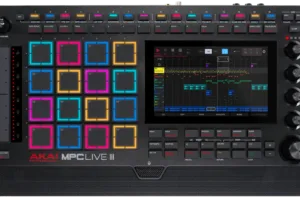
- Akai MPC Sample: a compact sampler built around the pad-based MPC workflow instead of note columns.
- Elektron Digitakt II: a step-sequenced sampler aimed more at live use, with proprietary firmware.
With CE 1.0, the Tracker becomes one of the few sampling instruments whose firmware can be read and modified almost in full, the synth core aside. Its long-term value will depend on how active the community turns out to be.