Noise Lab Beat Designer: a map-based Eurorack drum sequencer
Noise Lab releases the Beat Designer, a 12 HP Eurorack drum sequencer driven by a map of 289 grooves, at €221 excluding VAT.
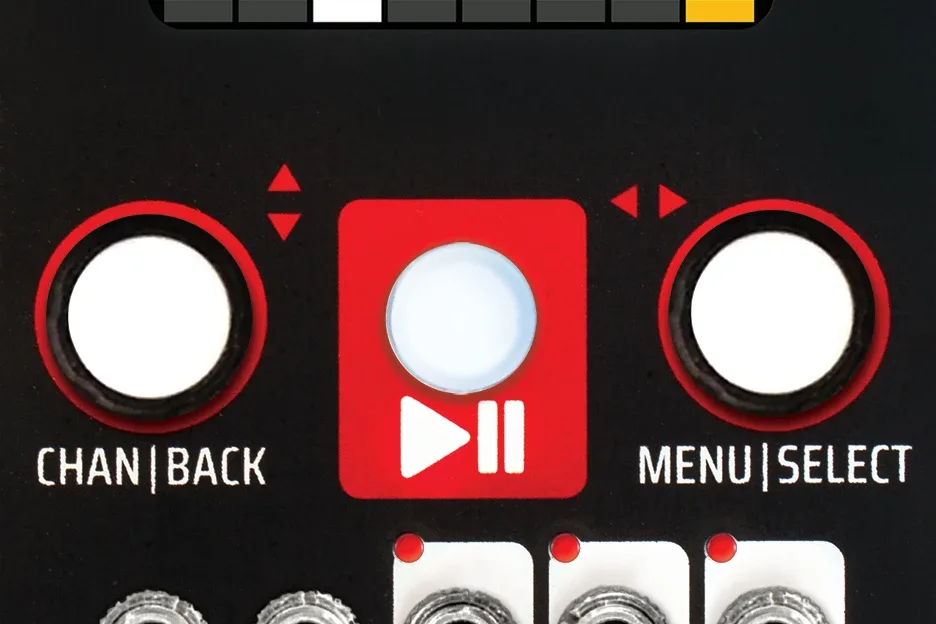
Swedish maker Noise Lab is now selling the Beat Designer, a 12 HP Eurorack drum sequencer. The idea, set out on the official Noise Lab page: instead of programming a beat step by step, you move across a map of grooves, then reshape the one you like without ever stopping playback. Suggested retail price: €221 excluding VAT.
A map of grooves instead of a step grid
A conventional sequencer shows a grid of 16 steps per drum, switched on one at a time. The Beat Designer starts from a Beat Map of 17 × 17 positions, which Noise Lab says was distilled from a large set of drum loops: rock, hip hop, drum & bass, breakbeat, trip hop, jazz, funk and dance. Every position is a complete groove, and neighboring positions are musically related, so you drift from one feel to another by turning two encoders. The manual explains that each track has its own position on the map, so you can build a hybrid kit, such as a funk kick under drum & bass hats.
Four controls to shape the groove
- Density sets how busy each drum is: accents and backbone come first, ghost notes later;
- Balance pushes hits toward or away from the downbeats;
- Variation adds controlled unpredictability;
- Fills places 0 to 8 drum fills in an eight-bar phrase, always in the last beat of the bar.
There is also swing (0 to 100), a tempo of 40 to 220 BPM and a pattern length of 16, 12, 8 or 4 steps. Steps, sequences and gates are explained in our article on the arpeggiator.
From patterns to songs
The module stores 260 patterns and 40 chains of 32 cells in flash memory, so verse, chorus and bridge can be strung into a whole song. Two CV (control voltage) inputs let the rest of the modular system act on the beat: ratchets (fast bursts of hits), density, variation, or jumping to the next pattern and resetting from a gate. The clock can be received or sent, at 1 to 48 pulses per quarter note.
Specifications
| Item | Beat Designer |
|---|---|
| Format | Eurorack, 12 HP |
| Display | 2-inch color, 320 × 240 px |
| Controls | 2 push encoders, lit Play button |
| Outputs | 6 trigger outputs (20 ms) |
| Inputs | clock, 2 CV inputs |
| Memory | 260 patterns, 40 chains of 32 cells |
| Current draw | 80 mA (+12 V), 10 mA (−12 V) |
| Price | €221 excluding VAT (suggested retail) |
At 80 mA on the +12 V rail, the module is light on a case’s power budget: how to calculate it is covered in our guide Eurorack explained: the format and your first case.
The demo
The video featured on the Noise Lab page was filmed by Molten Music Technology at SynthFest 2026.
Who it is for, what it costs, what it competes with
Who it is for. Modular players who perform live and want lively beats without spending the evening programming steps. The Beat Designer makes no sound itself: it needs drum modules or voices to trigger. Its six outputs match the six voices of the Drum Designer, the same maker’s analog drum module (18 HP, €299 excluding VAT).
What it costs. €221 excluding VAT, Noise Lab’s suggested retail price. The module is sold through specialist dealers, not directly.
What it competes with.
- Mutable Instruments Grids: the module that made the drum map popular in Eurorack, in 8 HP, with three trigger and three accent outputs. It is no longer made, but its open-source code lives on in clones. The Beat Designer goes further, with six tracks, a display, a finer map and pattern and song memory.
- Conventional step-based drum sequencers: more precise for writing a beat note by note, slower for improvising.
The module has not been tested here: the demo above and the official manual show how it works before you buy.